Commercial Vent and Ductwork Cleaning in Dallas
Professional HVAC system cleaning that improves indoor air quality, enhances energy efficiency, and protects occupant health
Commercial Vent and Ductwork Cleaning in Dallas
Professional HVAC system cleaning that improves indoor air quality, enhances energy efficiency, and protects occupant health
Commercial HVAC ductwork serves as the respiratory system for your building, circulating conditioned air throughout your facility. Over time, these hidden pathways accumulate dust, debris, allergens, mold, and contaminants that compromise air quality, reduce system efficiency, and potentially impact occupant health. For Dallas businesses, where air conditioning runs extensively during hot Texas summers, clean ductwork is essential for optimal system performance and healthy indoor environments.
Professional duct cleaning services employ NADCA (National Air Duct Cleaners Association) standards and specialized equipment to thoroughly clean ventilation systems from supply and return ducts to air handlers and terminal units. This comprehensive approach removes years of accumulated contamination, restoring proper airflow and reducing the burden on HVAC equipment. For Dallas commercial facilities concerned with energy costs, employee health, or compliance with indoor air quality standards, professional duct cleaning provides measurable benefits with documented results.
NADCA Standards for Commercial Air Duct Cleaning
The National Air Duct Cleaners Association (NADCA) establishes the industry standards for professional duct cleaning. NADCA's ACR Standard (Assessment, Cleaning, and Restoration) provides specific guidelines for evaluating HVAC system contamination, cleaning procedures, and post-cleaning verification. Dallas businesses should seek NADCA-certified providers to ensure services meet professional standards.
The ACR Standard requires comprehensive system assessment before cleaning, including visual inspection of ductwork interior, air handler components, and terminal units. Cleaning scope must address all components of the air conveyance system, not merely visible register areas. The standard specifies acceptable cleanliness levels and verification methods including visual inspection and debris measurement.
NADCA certification requires technicians to complete formal training and pass examinations covering HVAC system design, cleaning methods, containment strategies, and safety protocols. Certified companies maintain insurance, follow standard procedures, and participate in continuing education. For commercial facilities, NADCA certification provides assurance that cleaning will be performed thoroughly and professionally, with documentation suitable for warranty, regulatory, and maintenance records.
- -Compliance with industry-recognized standards
- -Certified technician training and expertise
- -Comprehensive system assessment protocols
- -Documented cleaning verification
- -Insurance and professional accountability
Source Removal Methods and HEPA Vacuum Systems
Source removal is the foundation of effective duct cleaning—physically removing contaminants rather than merely dispersing them. Professional duct cleaning employs specialized equipment designed to dislodge and extract debris from ductwork interiors.
Mechanical agitation tools including rotating brushes, air whips, and compressed air nozzles break loose accumulated debris from duct surfaces. These tools navigate ductwork through access openings, reaching deep into the system. Negative air pressure systems—high-powered vacuum units—create suction that captures dislodged debris before it can escape into occupied spaces.
HEPA (High-Efficiency Particulate Air) filtration on vacuum exhaust prevents recontamination of building air during cleaning. True HEPA filters capture 99.97% of particles 0.3 microns and larger, ensuring that extracted contaminants don't simply recirculate. Professional equipment generates sufficient airflow (typically 5,000+ CFM for commercial systems) to maintain adequate suction throughout large duct networks. The combination of mechanical agitation and negative air collection provides thorough contaminant removal with minimal disruption to building operations.
- -Mechanical agitation tools for debris dislodging
- -High-powered negative air vacuum systems
- -HEPA filtration preventing recontamination
- -Remote navigation through access openings
- -Contained extraction preventing occupant exposure
Supply and Return Duct Cleaning Procedures
Complete duct cleaning addresses both supply ducts (delivering conditioned air to spaces) and return ducts (drawing air back to the air handler). Each system component requires specific attention.
Supply duct cleaning begins at the air handler and progresses toward terminal units. Technicians create access openings as needed to insert cleaning tools and vacuum connections. Agitation tools dislodge debris from duct walls while negative air pressure draws contaminants to collection equipment. Supply registers and diffusers are removed, cleaned, and replaced. In commercial systems with VAV boxes and reheat coils, these components receive individual attention.
Return duct cleaning addresses the pathway drawing air from occupied spaces back to the air handler. These ducts typically accumulate more debris due to constant airflow and limited filtration. Return grilles, filters (replaced during service), and plenums are thoroughly cleaned. Fire dampers and smoke detectors within ductwork are inspected and cleaned per code requirements. The complete supply and return pathway cleaning ensures the entire air circulation system is free of accumulated contamination.
- -Complete supply pathway cleaning from handler to terminals
- -Return system debris removal and grille cleaning
- -VAV box and component attention
- -Fire damper and detector code compliance
- -Filter replacement and system restoration
Air Handler Unit and Coil Cleaning
The air handler unit (AHU) represents the heart of the HVAC system, and thorough cleaning includes all AHU components. Dirty air handlers recirculate contamination even after duct cleaning, making AHU attention essential for comprehensive service.
Blower assemblies including fan blades, housings, and motors accumulate significant debris that affects balance, efficiency, and air quality. Coils—both evaporator (cooling) and heating coils—collect dust and debris that insulates heat transfer surfaces, reducing efficiency and potentially causing freeze-ups or pressure problems. Drain pans and condensate lines breed bacteria and mold if not properly cleaned and treated.
Professional AHU cleaning includes: disassembly and cleaning of blower components; foaming cleaner application to coils followed by rinsing (where drainage permits) or vacuum extraction; drain pan sanitization and treatment with biocides or algaecides; and inspection/replacement of belts, filters, and worn components. Coil cleaning alone can improve cooling efficiency by 10-25% while improving air quality and reducing system strain.
- -Improved heat transfer efficiency (10-25% gain)
- -Elimination of blower imbalance from debris
- -Drain pan bacteria and mold control
- -Extended component lifespan
- -Enhanced overall system performance
Kitchen Exhaust and Grease Duct Cleaning
Commercial kitchen exhaust systems require specialized cleaning beyond standard HVAC ductwork. Grease accumulation in kitchen hoods, ducts, and fans creates fire hazards and code violations while reducing ventilation effectiveness.
NFPA 96 (National Fire Protection Association Standard for Ventilation Control and Fire Protection of Commercial Cooking Operations) mandates regular cleaning of kitchen exhaust systems based on cooking volume. Heavy-volume operations may require monthly or quarterly cleaning, while lighter use may permit semi-annual service. Dallas fire codes and insurance requirements typically mirror NFPA 96 standards.
Professional kitchen exhaust cleaning includes: complete hood cleaning including filters, drip trays, and accessible ductwork; duct scraping to remove grease deposits from interior surfaces; fan cleaning including blades, housings, and roofs (if accessible); and capture of cleaning residues preventing roof and environmental contamination. Post-cleaning documentation including photos and service reports provides compliance verification for fire inspectors and insurance carriers.
- -NFPA 96 compliance cleaning
- -Complete hood, duct, and fan attention
- -Grease deposit removal and capture
- -Before/after photo documentation
- -Compliance reporting for inspectors
Dryer Vent Cleaning for Commercial Facilities
Commercial dryer vent systems, common in multi-family housing, hospitality, healthcare, and industrial laundries, accumulate lint that creates fire hazards and reduces drying efficiency. Professional cleaning addresses both safety and operational concerns.
Lint accumulation restricts airflow, causing dryers to run longer, use more energy, and experience increased wear. More critically, lint is highly combustible, and dryer fires cause thousands of structure fires annually. NFPA standards and manufacturer requirements specify regular vent cleaning for commercial installations.
Commercial dryer vent cleaning includes: inspection of vent routing and termination; lint removal from duct interiors using brushes, air tools, and vacuum systems; lint trap and cabinet area cleaning; termination inspection and repair if damaged; and airflow measurement to verify improved ventilation. Multi-dryer systems in commercial laundries require comprehensive attention to main trunk lines and individual branch ducts. Post-cleaning documentation provides maintenance records and compliance verification.
- -Lint removal from complete vent pathways
- -Improved dryer efficiency and reduced cycle times
- -Fire hazard elimination
- -Termination inspection and repair
- -Airflow verification measurements
Indoor Air Quality Testing and Verification
Professional duct cleaning services provide verification that cleaning objectives have been achieved. Various methods document improvement in system cleanliness and air quality.
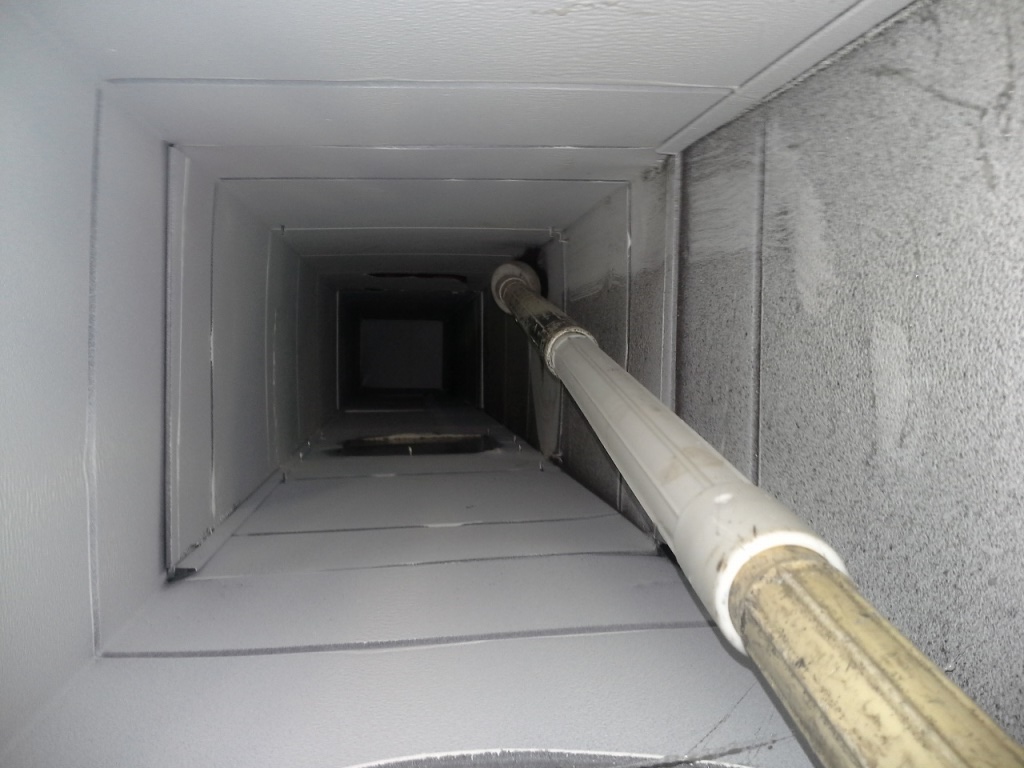
Visual inspection using remote cameras examines ductwork interior before and after cleaning, providing photographic documentation of contamination removal. Debris sampling—collecting material extracted during cleaning—quantifies contamination levels and can identify specific contaminants like mold, dust mite debris, or construction residue.
Air quality testing measures particulate levels, mold spores, or specific contaminants before and after cleaning to document improvement. Particle counters measure airborne particulate reduction following system cleaning. Pressure differential measurements verify restored airflow and reduced system resistance. Professional services provide comprehensive documentation including photos, measurements, and service reports that support warranty claims, regulatory compliance, and maintenance records.
For Dallas facilities concerned with occupant health, allergies, or asthma, documented air quality improvement following duct cleaning provides assurance that indoor environment investments deliver results.
- -Before/after photographic documentation
- -Debris quantification and analysis
- -Airborne particulate measurement
- -System airflow verification
- -Comprehensive service reporting
Frequently Asked Questions
How often should commercial ductwork be cleaned?
Cleaning frequency depends on facility type, occupancy, environmental conditions, and system usage. NADCA guidelines suggest inspection every 2 years with cleaning as needed based on contamination levels. High-particulate environments including manufacturing, construction sites, and facilities near highways may need annual cleaning. Office buildings typically benefit from cleaning every 3-5 years. Healthcare facilities, schools, and buildings with sensitive populations may require more frequent service. HVAC systems in Dallas face particular challenges from dust, pollen, and construction debris, warranting regular assessment. Post-construction or renovation cleaning is essential to remove construction debris. A professional assessment examines your specific system and conditions to recommend appropriate intervals.
What are the signs that ducts need professional cleaning?
Several indicators suggest duct cleaning is needed: visible dust or debris blowing from supply registers; musty or stale odors when HVAC operates; excessive dust accumulation on surfaces shortly after cleaning; visible mold growth in or near ductwork; unexplained allergy or respiratory symptoms among occupants; recent construction or renovation generating dust; pest infestation evidence in ductwork; and reduced airflow from registers indicating blockage. Energy bills increasing without explanation may indicate system inefficiency from dirty coils or restricted airflow. Visual inspection of accessible ductwork revealing contamination confirms need. Professional assessment provides definitive evaluation of whether cleaning will provide benefits for your specific system and conditions.
Does duct cleaning improve HVAC efficiency?
Yes, duct cleaning can improve HVAC efficiency, though the magnitude depends on contamination levels and system conditions. Clean ductwork reduces airflow resistance, allowing fans to move air more efficiently. Studies indicate potential energy savings of 10-25% when combined with coil cleaning and system maintenance. The primary efficiency gains come from air handler coil cleaning—dirty coils act as insulators, reducing heat transfer and forcing systems to work harder and longer. Clean blower components operate with better balance and reduced strain. While duct cleaning alone provides modest efficiency gains, comprehensive system cleaning including coils and components delivers measurable energy savings. For Dallas facilities with extensive cooling seasons, efficiency improvements translate directly to reduced operating costs during peak demand periods.
How long does commercial duct cleaning take?
Project duration depends on system size, complexity, contamination levels, and facility type. Small commercial systems (under 5,000 square feet) may require 1-2 days. Medium facilities (10,000-50,000 square feet) typically need 2-4 days. Large commercial buildings or campuses may require weeks with phased completion to minimize operational disruption. Factors extending timeline include: extensive contamination requiring aggressive cleaning; difficult access requiring multiple opening creation; coordination with building operations for area shutdowns; and kitchen exhaust or specialized systems requiring additional procedures. Professional services provide detailed timeline estimates during project planning, often working evenings or weekends to accommodate operational needs. Dallas climate considerations may influence scheduling to avoid peak cooling periods when system downtime is most disruptive.
Will duct cleaning create dust in my facility?
Professional duct cleaning using proper containment should not create dust problems in occupied areas. Negative air pressure systems capture dislodged debris at the point of cleaning, preventing escape into building spaces. HEPA filtration on vacuum exhaust ensures captured particles don't recirculate. Containment barriers isolate work areas when needed. However, some temporary dust generation is possible: during access opening creation in ductwork; if containment is compromised; or during register removal/replacement. Reputable companies take precautions including: sealing registers before removal; maintaining continuous negative pressure; using HEPA-filtered equipment; and post-cleaning verification that spaces remain clean. Any dust generated during professional service is typically far less than the contamination being removed from the system. Post-cleaning space cleaning may be recommended as a precaution.
Service Areas
We proudly serve businesses throughout the Dallas-Fort Worth metroplex, including:
services planning guide
How to plan commercial vent and ductwork cleaning for a commercial facility in Dallas
Janitorial Services of Dallas uses the following planning framework to help property managers and business owners turn a request for recurring janitorial and facility maintenance into a scope that can be walked, priced, scheduled, and checked. It is designed for practical comparison and does not replace site-specific safety, material, vendor, or regulatory requirements.
Define the Work Before Pricing It
A walkthrough for commercial vent and ductwork cleaning is most productive when the decision-maker identifies the spaces that create complaints, the areas that carry the most traffic, and the tasks the current program misses. Those observations turn a generic checklist into a practical scope tied to the way the property is actually used. The strongest commercial vent and ductwork cleaning plan names measurable outcomes rather than relying on broad phrases such as “keep it clean.” Examples include streak-free entry glass, stocked and odor-controlled restrooms, debris-free floor edges, sanitized touchpoints, and completion before a stated opening time. A commercial scope should distinguish appearance cleaning from hygiene work and asset maintenance. Dust removal, disinfection, floor finish care, glass restoration, and debris control solve different problems, use different processes, and often belong on different frequencies. Commercial Vent And Ductwork Cleaning should begin with a written definition of the rooms, surfaces, fixtures, equipment boundaries, and access conditions included in the work. A useful scope separates routine tasks from periodic restoration so the facility manager can see what happens on every visit and what occurs only on a planned cycle.
Build the Schedule Around Operations
Access planning is part of service planning. Keys, badges, alarm procedures, loading access, elevator reservations, escort rules, and locked-room approvals should be confirmed before the first commercial vent and ductwork cleaning visit so the crew can complete the full scope without improvising. Recurring commercial vent and ductwork cleaning should include planned periodic work instead of waiting for visible deterioration. Rotating detail tasks through monthly or quarterly cycles protects floors, fixtures, glass, vents, edges, and other zones that routine visits cannot address completely. A nightly, daily, weekly, or project schedule changes more than visit frequency. It changes how much soil accumulates between visits, which tools are appropriate, how long each visit takes, and whether periodic deep work must be layered into the agreement. Facilities with irregular occupancy should use a flexible service calendar. Seasonal traffic, events, construction phases, tenant move-ins, inventory cycles, and weather can all create temporary cleaning demand that a rigid schedule will miss.
Make Quality Control Observable
Consistent crew assignments improve commercial vent and ductwork cleaning because the team learns access routines, material sensitivities, recurring problem areas, and the expectations of the facility contact. Coverage plans are still necessary for absences so consistency does not depend on one individual. A quality program should explain how corrections are handled. The facility contact needs a clear response path, a reasonable correction window, and confirmation when the issue is closed rather than a vague assurance that someone will look into it. Useful performance conversations separate an isolated miss from a recurring process failure. One unemptied bin requires correction; repeated misses in the same wing may indicate unclear zoning, inadequate time, or a checklist that does not match the building. Quality control works best when it is tied to the site-specific scope. A supervisor can inspect completion against named rooms and outcomes, record exceptions, assign corrections, and identify patterns that require a change in staffing, tools, or frequency.
Match Methods to Materials and Risk
Equipment should be selected for the facility rather than for convenience. HEPA filtration, low-moisture extraction, auto-scrubbing, water-fed poles, pressure equipment, or detail tools may be appropriate depending on access, surface, soil, and reopening time. Surface identification matters because a process that works on one material can damage another. Before commercial vent and ductwork cleaning, confirm flooring, stone, coated metal, glass treatments, upholstery, painted surfaces, and manufacturer restrictions that affect chemistry or agitation. Dwell time and physical removal are central to effective cleaning. A product cannot perform as intended if it is wiped away immediately, and loosened soil still needs to be removed with clean tools rather than redistributed across the surface. Consumable supplies deserve their own responsibility list. Soap, paper products, liners, dispensers, batteries, air fresheners, and specialty items may be client supplied, contractor supplied, or billed separately, but the agreement should not leave that question open.
Use the Walkthrough to Build the Scope
For larger properties, divide the walkthrough into zones and record the floor type, use, occupancy, and desired frequency for each. This produces a proposal that can be adjusted by zone without rewriting the entire program. Discuss current service honestly during the walkthrough. What works should be preserved, what fails should be corrected, and any unrealistic expectation should be resolved before it becomes a recurring dispute after startup. Ask department leads or regular occupants where cleaning failures are most visible. Facility managers often know the formal complaints, while daily users can identify recurring issues such as neglected corners, supply shortages, or timing conflicts. A useful walkthrough ends with next steps: who will receive the written scope, who can approve revisions, whether a second technical visit is required, and what information is still needed before pricing is final.
Put the Service Agreement in Writing
Service-level expectations should be realistic and observable. A promise of “perfect cleaning” is less useful than response times, inspection routines, named completion outcomes, and an escalation process for repeated deficiencies. Cancellation, renewal, and notice terms deserve the same attention as the cleaning checklist. A facility manager comparing proposals should understand the initial term, renewal method, price-review process, and the notice required to change or end service. The agreement should state how holidays, weather closures, and client-requested skips are handled. These events affect visit counts and staffing, and the billing treatment should be clear before the first calendar exception. Pricing should state whether it is monthly, per visit, hourly, or project based and should identify the assumptions behind it. Changes in occupied square footage, frequency, access time, or task scope need an agreed method for repricing.
Plan for Dallas Facility Conditions
DFW traffic makes realistic arrival windows important, especially when a crew must meet security or elevator access at a fixed time. The plan should protect enough on-site time to complete the work rather than compressing the scope after a delayed handoff. Fast regional growth creates frequent move-ins, renovations, tenant turnovers, and occupancy changes. The cleaning scope should be reviewed when a property changes use instead of assuming the previous tenant’s schedule remains appropriate. Heat and air-conditioning runtime can increase dust movement through vents, ledges, high surfaces, and return-air zones. Periodic detail work should be scheduled before accumulation becomes visible or begins cycling back into occupied areas. Dallas facilities contend with long cooling seasons, tracked-in dust, pollen, severe-weather debris, and rapid development activity. Those conditions can influence entry cleaning, high dusting, floor care, glass maintenance, and the timing of periodic deep work.
Compare Providers on More Than Price
Ask each provider to explain staffing assumptions, visit length, supervision, equipment, and the process for covering absences. The answer reveals whether the proposal is an operating plan or simply a price attached to a task list. Evaluate communication alongside cleaning technique. A facility manager needs timely updates, a named account contact, documented service requests, and a reliable process for resolving issues without repeatedly explaining the account. When comparing commercial vent and ductwork cleaning proposals, normalize the scope before comparing price. A lower monthly number may exclude periodic work, supplies, supervision, floor care, or enough labor to complete the stated checklist. Consider the cost of under-scoping. Persistent complaints, damaged finishes, emergency restoration, staff time spent supervising the vendor, and repeated provider changes can cost more than a properly designed recurring program.
Start, Measure, and Adjust the Program
The first visit should not be treated as an ordinary maintenance visit when buildup already exists. Startup cleaning establishes a maintainable baseline and gives the crew a realistic view of the time required for future service. Task sequencing affects results. High dusting should precede lower-surface cleaning, dry soil removal should precede wet work, and areas with restricted reopening times should be completed early enough to dry or ventilate. Closeout reporting should match the account’s complexity. A small property may need simple completion confirmation; a larger or specialized account may need inspection notes, issue photographs, supply alerts, and a record of periodic tasks. A stable program still needs review after renovations, staffing growth, seasonal traffic, operating-hour changes, or new equipment. Each change can alter soil load, access, or the time available for commercial vent and ductwork cleaning.
Bring to the walkthrough
- Approximate square footage, floor plan, and operating hours
- Current frequency, known complaints, and priority areas
- Flooring and surface notes, restricted rooms, and access rules
- Desired start date, budget constraints, and approval contacts
Expect in a written proposal
- Task scope by zone and visit frequency
- Service windows, periodic work, and supply responsibility
- Quality checks, communication, and correction procedures
- Pricing assumptions, exclusions, and change-order rules