Professional Carpet and Upholstery Cleaning Services in Dallas
Restore and protect your commercial flooring investments with industry-leading cleaning technology and certified technicians
Professional Carpet and Upholstery Cleaning Services in Dallas
Restore and protect your commercial flooring investments with industry-leading cleaning technology and certified technicians
Commercial carpet and upholstery represent significant investments for Dallas businesses, and proper maintenance is essential for protecting these assets while maintaining a professional appearance. In the Dallas-Fort Worth metroplex, where businesses experience high foot traffic and unique climate challenges including dust, pollen, and humidity, professional cleaning services are not just aesthetic choices—they're necessary for health, longevity, and operational efficiency.
Professional carpet and upholstery cleaning goes far beyond routine vacuuming and spot cleaning. IICRC-certified technicians employ advanced extraction methods, specialized cleaning solutions, and systematic approaches that remove embedded soil, allergens, and contaminants that regular maintenance cannot address. For Dallas commercial facilities ranging from corporate offices and healthcare facilities to hotels and retail spaces, regular professional cleaning extends carpet life by 30-50% while significantly improving indoor air quality.
The Science Behind Professional Carpet Cleaning
Understanding the science of carpet cleaning is essential for Dallas facility managers seeking optimal results. Carpet fibers act as filters, trapping soil, dust, allergens, and microorganisms that accumulate over time. Without professional extraction, these contaminants become embedded deep within the pile, causing fiber abrasion, discoloration, and potential health hazards.
Professional carpet cleaning employs principles of chemistry, physics, and mechanical action to achieve thorough soil removal. The process begins with pre-inspection and fiber identification, as different carpet materials—nylon, polyester, olefin, wool—require specific cleaning approaches. pH-balanced cleaning solutions are selected based on soil type and fiber characteristics to prevent damage while maximizing cleaning efficacy.
Soil suspension is a critical scientific concept in carpet cleaning. Cleaning agents work by breaking the bond between soil particles and carpet fibers through processes including emulsification (breaking down oils), dissolution (dissolving water-soluble soils), and encapsulation (surrounding dry particulate soils). Proper dwell time allows these chemical reactions to occur before mechanical agitation and extraction remove the suspended soils.
- -Extends carpet lifespan by removing abrasive soil particles
- -Eliminates allergens and improves indoor air quality
- -Restores original appearance and color vibrancy
- -Prevents permanent staining and fiber damage
- -Creates healthier environment for employees and visitors
Hot Water Extraction vs. Dry Cleaning Methods
The debate between hot water extraction (often called steam cleaning) and dry cleaning methods continues in the commercial cleaning industry. For Dallas businesses, understanding the differences helps in selecting the appropriate method for specific situations.
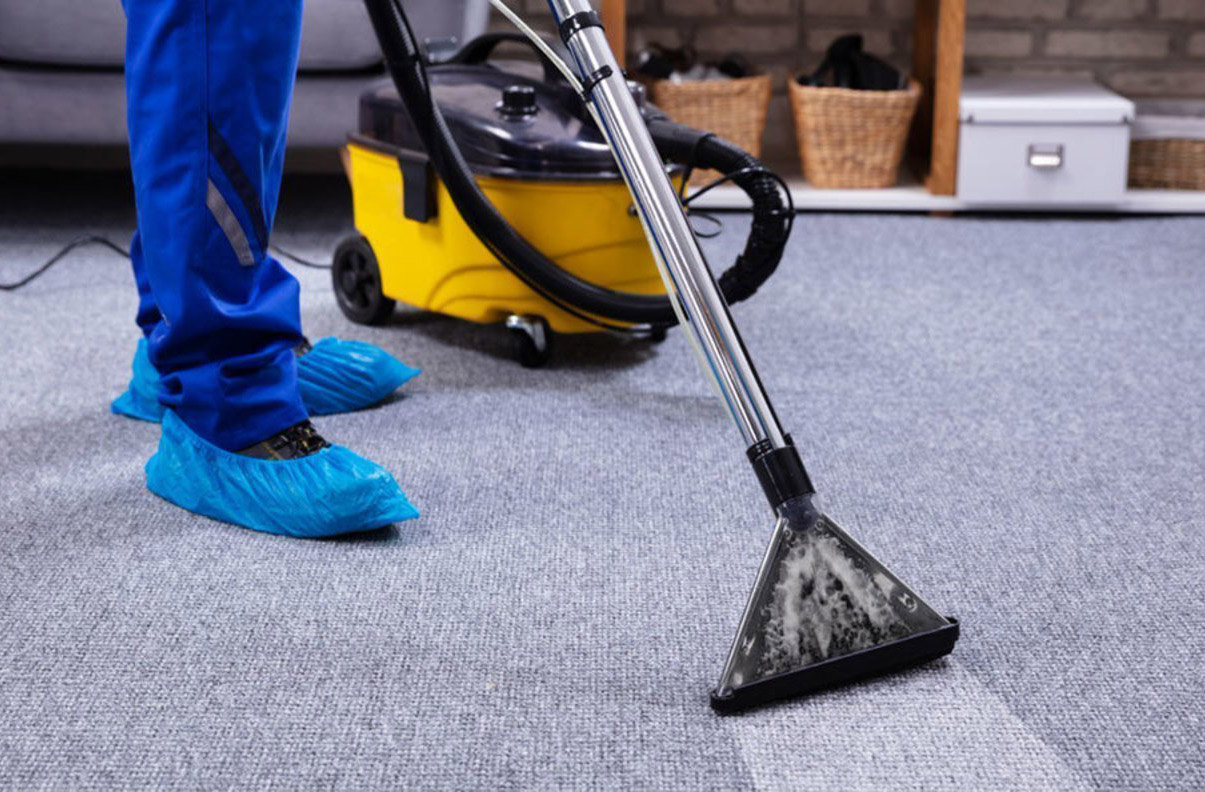
Hot water extraction is the method recommended by most carpet manufacturers and the Carpet and Rug Institute. This process injects heated cleaning solution under pressure into carpet fibers, immediately followed by powerful vacuum extraction that removes dissolved soils and excess moisture. The combination of heat (typically 120-250°F), pressure, and cleaning agents provides the most thorough soil removal available. Modern truck-mounted systems achieve superior results compared to portable units, with stronger suction power and consistent heat delivery.
Dry cleaning methods, including bonnet cleaning and dry compound cleaning, offer advantages for maintenance cleaning and situations requiring rapid drying. These methods use minimal moisture and allow immediate use of cleaned areas. However, they primarily address surface soils rather than deep extraction. For Dallas facilities requiring intensive cleaning or addressing significant soiling, hot water extraction remains the gold standard.
- -Truck-mounted extraction systems for maximum power
- -Portable units for high-rise and restricted access areas
- -Low-moisture encapsulation for interim maintenance
- -Combination approaches for comprehensive cleaning programs
Commercial Upholstery Cleaning Techniques
Commercial upholstery cleaning requires specialized knowledge and techniques distinct from carpet cleaning. Office furniture, reception seating, and hospitality furnishings in Dallas commercial spaces accumulate body oils, dust, food particles, and atmospheric soils that require professional attention.
The upholstery cleaning process begins with detailed fabric identification. Synthetic fabrics like polyester, nylon, and olefin respond differently to cleaning agents than natural fibers like cotton, linen, wool, or silk. Additionally, fabric construction—woven vs. non-woven, backed vs. unbacked—affects cleaning approaches. Professional technicians perform fiber testing to determine appropriate cleaning methods and solutions.
Extraction cleaning for upholstery employs controlled moisture application to prevent over-wetting, which can cause fabric shrinkage, dye bleeding, or cushion damage. Specialized hand tools allow precise cleaning of cushions, arms, and detailed areas. Protector applications following cleaning help repel future soils and extend cleaning intervals. For leather upholstery, pH-balanced cleaners and conditioning treatments preserve the material's integrity and appearance.
- -Fabric identification and testing protocols
- -Controlled moisture application systems
- -Specialized hand tools for detailed cleaning
- -Protector application for extended soil resistance
- -Leather cleaning and conditioning services
Benefits for Dallas Businesses
Dallas commercial properties face unique environmental challenges that make professional carpet and upholstery cleaning particularly valuable. The North Texas climate generates significant dust and allergen loads, while high summer humidity creates conditions favorable to mold and mildew growth in uncleaned textiles.
Professional cleaning delivers measurable business benefits beyond appearance. Studies indicate that clean work environments improve employee productivity and reduce sick days by removing allergens, bacteria, and other contaminants. For customer-facing businesses, clean carpets and upholstery create positive first impressions that influence client perceptions and purchasing decisions.
Asset protection represents another significant advantage. Regular professional cleaning prevents permanent damage from embedded soils and stains, extending the useful life of carpet and furniture investments. For Dallas businesses, where replacement costs for commercial-grade carpet can exceed $30-50 per square yard installed, the return on cleaning investment is substantial. Many manufacturers require professional cleaning every 12-18 months to maintain warranty coverage.
- -Improved employee health and productivity
- -Enhanced professional image for clients and visitors
- -Extended asset lifespan and warranty compliance
- -Removal of Dallas-area allergens and dust
- -Prevention of permanent staining and damage
Industry Standards and IICRC Certification
The Institute of Inspection, Cleaning and Restoration Certification (IICRC) sets the professional standards for carpet and upholstery cleaning. IICRC-certified technicians undergo rigorous training in cleaning science, fiber identification, equipment operation, and safety protocols. For Dallas businesses, selecting IICRC-certified providers ensures services meet industry best practices.
The IICRC S100 Standard for Professional Cleaning of Textile Floor Coverings provides specific guidelines for carpet cleaning procedures, while the S300 Standard addresses upholstery and fabric cleaning. These standards cover inspection protocols, cleaning method selection, spot and stain removal, and post-cleaning procedures. Certified technicians understand how to adjust techniques based on soiling conditions, fiber types, and environmental factors.
Professional cleaning companies also follow manufacturer guidelines for specific carpet and fabric products. Many commercial carpet warranties specify cleaning methods, frequency, and approved cleaning agents. Using non-approved methods or products can void warranties. Professional cleaners document their procedures and can provide cleaning certificates for warranty compliance purposes.
- -IICRC-certified technicians following industry standards
- -Manufacturer warranty compliance documentation
- -Proper chemical selection and dilution protocols
- -Safety and environmental compliance
- -Ongoing education on current cleaning technologies
Maintenance Programs and Scheduling
Effective carpet and upholstery maintenance requires systematic scheduling based on traffic levels, facility use, and appearance requirements. Dallas facilities benefit from customized maintenance programs that balance cleaning frequency with budget considerations and operational needs.
The industry-standard approach combines regular interim maintenance with periodic deep cleaning. Interim methods like encapsulation or bonnet cleaning address surface soils between extraction cleanings, maintaining appearance while extending intervals between intensive services. Deep extraction cleaning, typically scheduled quarterly for high-traffic areas and semi-annually for moderate traffic, removes accumulated embedded soils.
Professional cleaning companies work with Dallas facility managers to develop maintenance schedules considering business operations. Evening and weekend service options minimize disruption, while area-by-area scheduling allows continued facility use during cleaning. Maintenance agreements often include priority scheduling, documented service records, and performance guarantees that provide predictable costs and consistent results.
- -Customized maintenance schedules based on traffic analysis
- -Interim and deep cleaning combination programs
- -After-hours and weekend service availability
- -Documented service history and performance tracking
- -Predictable budgeting through maintenance agreements
Health and Indoor Air Quality Benefits
The health implications of carpet and upholstery cleaning extend far beyond appearance. Carpets and upholstered furniture act as reservoirs for allergens, dust mites, bacteria, fungi, and other microorganisms that affect indoor air quality and occupant health. For Dallas businesses, where seasonal allergens are significant concerns, professional cleaning provides measurable health benefits.
Studies demonstrate that proper carpet extraction removes up to 98% of common allergens from carpet fibers. Hot water extraction at appropriate temperatures kills dust mites and neutralizes many biological contaminants. Professional cleaning also removes volatile organic compounds (VOCs) and other chemical residues that accumulate in textile fibers from cleaning products, building materials, and atmospheric sources.
For Dallas healthcare facilities, schools, and businesses with allergy-sensitive employees, regular professional cleaning contributes to healthier indoor environments. The American Lung Association and EPA recognize proper carpet maintenance as a component of good indoor air quality management. Professional cleaning companies can provide pre- and post-cleaning allergen testing to document improvement in indoor environmental quality.
- -Removes up to 98% of common allergens
- -Reduces dust mite populations and biological contaminants
- -Eliminates accumulated VOCs and chemical residues
- -Supports overall indoor air quality management
- -Creates healthier environment for sensitive individuals
Frequently Asked Questions
How long does commercial carpet cleaning take to dry?
Drying times vary based on cleaning method, carpet type, humidity, and air circulation. Hot water extraction typically requires 6-24 hours for complete drying, though carpets can usually be walked on within 2-4 hours with clean footwear. Low-moisture encapsulation methods allow immediate use. Dallas humidity levels during summer months may extend drying times, so professional cleaners use air movers and dehumidifiers to accelerate drying. Proper ventilation and HVAC operation significantly impact drying speed.
What cleaning methods work best for high-traffic commercial areas?
High-traffic areas benefit from a combination approach. Hot water extraction provides the most thorough cleaning for accumulated soil and should be performed quarterly for heavy traffic zones. Between extraction cleanings, low-moisture encapsulation or bonnet cleaning maintains appearance and removes surface soils. Entryways and main corridors require the most frequent attention. Professional cleaners assess traffic patterns and soiling conditions to recommend appropriate maintenance frequencies and methods for different areas within your facility.
How often should office carpets be professionally cleaned?
Cleaning frequency depends on traffic levels, facility type, and appearance standards. General office areas typically require professional extraction every 6-12 months. High-traffic zones like entrances, hallways, and conference rooms need cleaning every 3-6 months. Healthcare facilities, restaurants, and retail spaces often require monthly or quarterly service. Many carpet manufacturers specify professional cleaning every 12-18 months to maintain warranties. A professional assessment of your specific facility provides the most accurate maintenance schedule recommendation.
Are the cleaning solutions safe for employees with allergies?
Professional carpet cleaners use cleaning solutions specifically formulated for commercial environments and occupant safety. Green cleaning products with low VOCs and hypoallergenic formulations are available for facilities with sensitive populations. Reputable companies rinse thoroughly to remove cleaning agent residues. Pre-cleaning discussions about employee sensitivities allow selection of appropriate products. Many cleaning agents are EPA Safer Choice certified or meet similar environmental standards. Post-cleaning ventilation further minimizes any residual odors or compounds.
Can you remove set-in stains from commercial upholstery?
Professional cleaners have specialized techniques and products for addressing set-in stains on commercial upholstery. Success depends on stain type, fabric composition, and how long the stain has been present. Water-based stains, protein-based stains, oil-based stains, and dye stains each require different treatment approaches. Professional spotters and extraction equipment can often remove or significantly improve stains that resist consumer-grade products. However, some stains, particularly those that have set for extended periods or involved harsh chemicals, may cause permanent damage. Technicians can assess stain removal probability during pre-cleaning inspection.
Service Areas
We proudly serve businesses throughout the Dallas-Fort Worth metroplex, including: